
Frequently asked questions about insomnia
Defining insomnia disorder
What is insomnia disorder?
Insomnia disorder is defined as difficulty falling asleep, staying asleep and/or waking too early in the morning, experiencing symptoms at least 3 times a week for 3 months or more.1-3,6
These difficulties may affect daytime activities by impacting on your mood, concentration, memory and making you feel tired during the day.1-3
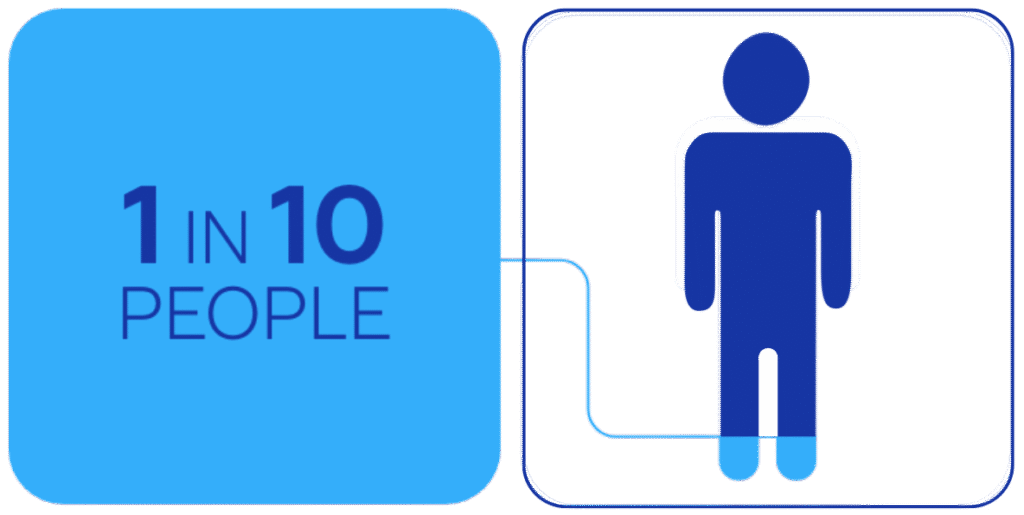
How many people have insomnia disorder?
If you’re one of them, know that you’re not alone and there are many different methods for managing insomnia out there.
What’s the difference between acute insomnia and insomnia disorder?
Trouble sleeping at least
3x
a week
Doesn’t everyone have trouble sleeping sometimes?
Sure. Lots of people experience a bad night’s sleep once in a while.
Symptoms and causes
What are common symptoms of insomnia disorder?
Some of the daytime symptoms of insomnia disorder include:
- Morning sleepiness
- Fatigue
- Bad work performance
- Reduced social interactions
- Poor concentration
- Irritability and bad moods
Can some things make insomnia worse?
This is an external link to an NHS website
Why do some people get insomnia disorder?
Different things can lead to trouble sleeping, including worries, stress, or going through a difficult time5.
Once these triggers resolve, or as time passes, most people are able to sleep again2-4. But in insomnia disorder, even if the triggers that originally caused trouble sleeping resolve, you may still not be able to sleep2-4.
Who is most likely to get insomnia disorder?
Plus, being exposed to stressful triggers can also increase your risk of developing insomnia. These triggers could be a stressful time at work, losing someone you love, being involved in an accident, or financial difficulties.5
That being said, having good sleep habits may help reduce the risk of insomnia for many people.14-29 Avoiding daytime napping, keeping your bedroom cool, and switching screens for music or reading are just a few sleep hygiene tips that may help you get a good night’s rest.16-17,20-21
This is an external link to an NHS website
Diagnosis
How is insomnia disorder diagnosed?
What can be done to help people with insomnia disorder?
If you have insomnia disorder, know that you are not alone – 1 in 10 people are going through the same thing.3
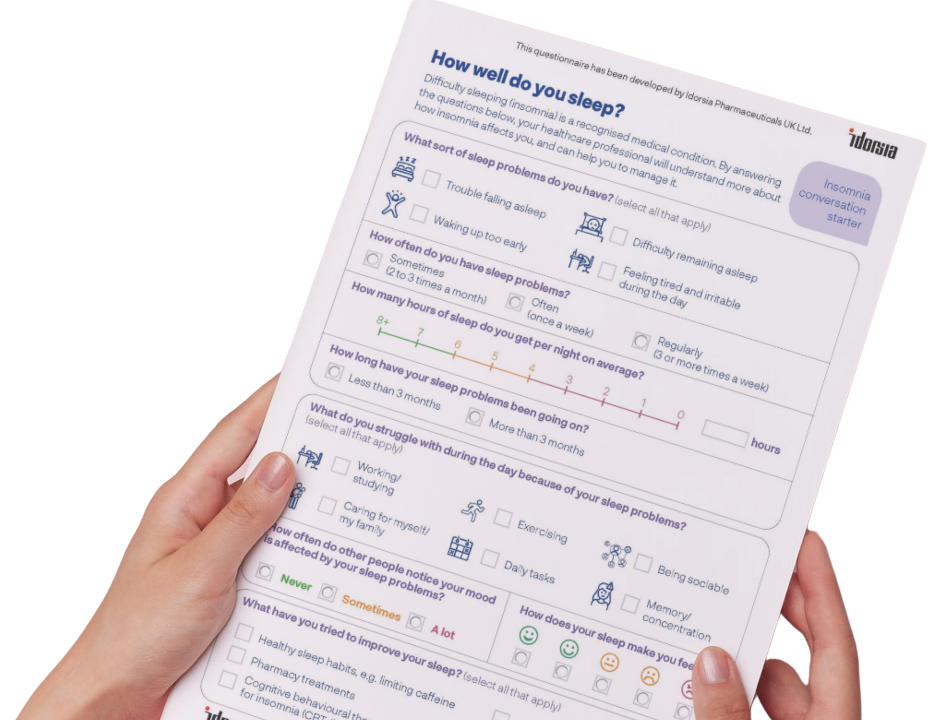
Insomnia disorder is a recognised medical condition, and help is available. If you’re struggling with your sleep, speaking with a doctor can be a good step towards finding the right support for you.
To prepare for your conversation, here’s a tool that can help: download the conversation starter
Get ready to talk with a healthcare professional
1. Ellis JG, et al. J Psych Res. 2012; 46: 1278–1285.
2. Riemann D, et al. J Sleep Res. 2017; 26(6): 675–700.
3. Vargas I, et al. Brain Sci. 2020; 10(2): 71.
4. Basta M, et al. Sleep Med Clin. 2007; 2(2): 279–291.
5. Wright CD, et al. Front Psychol. 2019; 10: 2498.
6. Roth T, J Clin Sleep Med. 2007; 3(5 suppl): S7–S10.
7. Riemann D, et al. Sleep Med Rev. 2010; 14(1): 19–31.
8. Killgore W, et al. Neuroreport. 2013; 24(5): 233–40.
9. Spadola CE, et al. Sleep. 2019 ; 42(11):zsz136.
10. O’Callaghan F, et al. Risk Manag Healthc Policy. 2018; 11: 263–271.
11. Sleep Foundation. Sleep Statistics. Available at: https://www.sleepfoundation.org/how-sleep-works/sleep-facts-statistics. Accessed August 2022.
12. Mallampalli MP and Carter CL. J Womens Health. 2014; 23(7): 553–562.
13. Pengo MF, et al. Chest. 2018; 154(1): 196–206.
14. Maurer LF, et al. Sleep. 2020; 12;43(11):zsaa096.
15. Stutz J, et al. Sports Med. 2019; 49(2):269–287.
16. Harding EC, et al. Front Neurosci. 2019; 13:336.
17. Shechter A, et al. J Psychiatr Res. 2018; 96:196–202.
18. Banno M, et al. Peer J. 2018; 6: e5172.
19. Dolezal BA, et al. Adv Prev Med. 2017; 1364387.
20. Ancoli-Israel S and Martin JL. J Clin Sleep Med. 2006; ;2(3):333–42.
21. Okamoto-Mizuno and Mizuno. J Physiol Anthropol. 2012; 31(1):14.
22. Saddichha S. Ann Indian Acad Neurol. 2010; 13(2): 94–102.
23. Anderson KN. J Thorac Dis. 2018; 10(Suppl 1): S94–S102.
24. Ong JC, et al. Sleep. 2014; 37(9):1553–63.
25. Lie JD, et al. P T. 2015; 40(11): 759–768, 771.
26. Bateson AN. Sleep Med. 2004; Suppl 1:S9–15.
27. Krystal AD, et al. World Psychiatry. 2019; 18(3): 337–352.
28. Madari S, et al. Neurotherapeutics. 2021; 8(1):44–52.
29. Everitt H, et al. Cochrane Database Syst Rev. 2018; 5(5):CD010753.